Slab Leak Repair in Cedar Park, TX
Under slab water leaks can compromise your foundation, escalate utility bills, and damage residential flooring. Learn how local soil shifts create leaks under concrete slabs and discover targeted diagnostic and repair solutions.
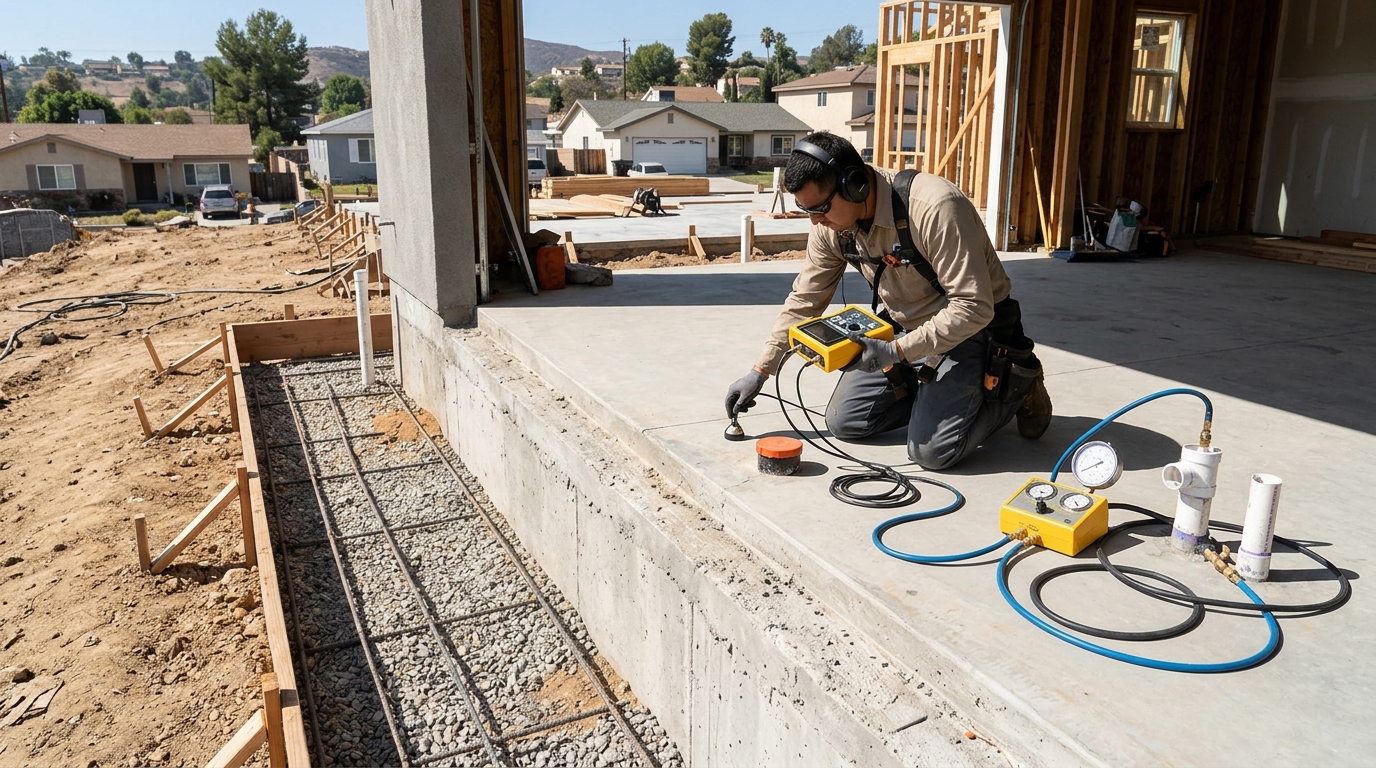
What Is a Slab Leak and Why Does It Occur in Cedar Park Homes?
A slab leak is a pressurized water supply line or drainage pipe rupture occurring underneath or within the structural concrete slab foundation of a building. When a leak under foundation Cedar Park occurs, water escapes continuously into the subgrade soil, bedrock, and slab bedding materials. Unlike conventional plumbing leaks visible under sinks, an under slab leak repair Cedar Park requires specialized diagnostic protocols because the failure point remains buried beneath inches of steel-reinforced concrete.
Homes throughout Cedar Park—spanning Williamson County from established neighborhoods to newer developments along US-183 and the 183A Toll Road—rest primarily on expansive black clay soil over limestone formations. During intense Central Texas summer droughts, these clay soils contract, shrink, and pull away from concrete foundations. When seasonal rains return, the clays expand aggressively, exerting upward and lateral hydrostatic pressures. This ongoing mechanical ground movement stresses rigid copper pipes and cast iron joints, rubbing them against aggregate stones or causing stress fractures. Furthermore, local municipal and well water supplies carry substantial mineral hardness, which causes gradual internal pitting corrosion inside copper lines over decades of service.
Suspecting a Leak Under Your Foundation?
Unchecked water escaping beneath your foundation can compromise soil compaction and elevate utility bills. Speak directly with a plumbing specialist today.
Call (888) 205-7875Warning Signs Checklist: When to Suspect a Foundation Leak
Because foundation leaks remain concealed beneath flooring, homeowners must rely on subtle behavioral and physical clues throughout the house. Contacting a qualified slab leak plumber Cedar Park promptly can prevent severe structural deterioration:
- Warm or hot floor areas: Noticeable hot spots on hardwood, tile, or carpet often point to a hot water line failure underneath the slab.
- The sound of rushing water: A faint hissing, dripping, or running water noise behind baseboards when all household fixtures are shut off.
- Unexplained water meter movement: If the flow indicator dial or digital meter display ticks while the home is silent, pressurized water is escaping.
- Sudden spikes in municipal water bills: Significant consumption increases without changes in household habits or irrigation schedules.
- Damp flooring or discolored baseboards: Moisture seeping upward through slab pores, loosening wood planks or discoloring grout lines.
- Cracks in foundation or drywall: Hairline fractures expanding across exterior brickwork, drywall seams, or interior concrete floors due to shifting subgrade soil.
- Mildew odors or fungal growth: Persistent damp smells trapped under carpet padding, floor coverings, or along interior wall plates.
What to Do Immediately While Awaiting Service
If you observe signs of a water leak under slab Cedar Park, take immediate protective actions to mitigate property damage:
- Locate and shut off the main water valve: Turn the primary water shutoff valve clockwise to stop pressurized water from feeding the ruptured pipe. The valve is typically located near the front hose bib or inside the water meter box near the curb.
- Turn off the water heater: If the leak involves hot water, switch off the electric breaker or turn the gas control knob to "Pilot" or "Off" to protect heating elements from dry firing.
- Document visible evidence: Photograph damp flooring, water meter readings, foundation cracks, and baseline utility statements before repair technicians begin work.
- Avoid breaking concrete prematurely: Never attempt to break concrete without professional acoustic or thermal tracing, as guessing rarely uncovers the exact failure point.
Slab Leak Repair Options and Cost Considerations
Homeowners frequently ask about slab leak repair cost Cedar Park. The overall expenditure varies according to the pipe's depth, accessibility, foundation engineering, and the selected repair method. Experienced technicians evaluate three standard remediation pathways:
- Direct Spot Repair: Technicians open a localized access point through the concrete slab directly above the leak, excise the damaged pipe section, and braze in new high-grade copper or specialized fittings. This approach is practical when the rest of the plumbing run remains in pristine condition.
- Overhead Pipe Rerouting: Rather than opening interior flooring, plumbers disconnect the compromised under-slab line and route a brand-new PEX line through interior wall cavities or the attic space. This non-invasive alternative prevents destruction of high-end flooring and preserves the concrete slab intact.
- Comprehensive Repiping: When an older home experiences multiple pipe failures or pervasive internal pitting corrosion, replacing the entire water distribution system above the foundation provides enduring peace of mind.
Discuss Your Repair Options with a Local Specialist
Get clear guidance on diagnostic procedures, rerouting alternatives, and foundation preservation in Cedar Park.
Call (888) 205-7875Explore Our Full Range of Specialized Services
Slab Leak Detection
Non-invasive electronic listening, line tracing, and pressure isolation pinpoint foundation leaks precisely without damaging interior living spaces.
Learn about detection →Hot Water Slab Leak Repair
Hot water lines expand and contract rapidly under concrete, causing premature stress ruptures, warm flooring spots, and constantly running heaters.
Explore hot water repairs →Slab Leak Reroute
Bypass failed underground lines entirely by running durable PEX piping through wall studs and attic cavities without jackhammering your home.
Review rerouting methods →Whole-House Repiping
Replace deteriorating copper, polybutylene, or galvanized lines throughout your home with high-durability overhead PEX distribution systems.
Read about repiping →Water Leak Detection
Pinpoint hidden leaks occurring inside structural walls, ceiling voids, crawl cavities, and exterior yard water mains using acoustic gear.
View leak detection details →Cast Iron Pipe Replacement
High-resolution video camera inspections and drain rehabilitation address deteriorated sub-slab cast iron sewer lines before foundation failure.
Inspect cast iron solutions →Slab Leak Insurance Help
Obtain comprehensive diagnostic documentation, moisture logs, and thermal photography required by homeowners insurance claim adjusters.
Understand insurance documentation →Serving Cedar Park Neighborhoods and Communities
Foundation plumbing issues require technicians familiar with local residential development eras and regional geological factors. We assist property owners seeking slab leak repair near Buttercup Creek, an established community developed through the late 1970s and 1980s where aging copper supply lines and foundation settling frequently intersect. We also serve homes requiring slab leak repair near Twin Creeks, where custom residences built along undulating golf course topography experience significant limestone shelf movement. Additionally, homeowners in surrounding subdivisions needing slab leak repair near Brushy Creek benefit from prompt diagnostics addressing expansive clay expansion.